
Minnesota Is Doing a Master Class in Resisting ICE
What media and people in Maine and elsewhere should know and do

As ICE expands enforcement in blue states, Minnesota shows what a disciplined, legally grounded response can look like and why other states should be paying attention.
In a deliberate political move, Trump and his allies surged thousands of ICE agents into Minnesota, a blue state with a far lower percentage of undocumented immigrants than red states like Texas, Utah, and Florida. They might have thought that Minnesotans would give them free rein.
What they encountered instead was a wide-ranging, largely cohesive resistance that’s attracted people who never protested before.
And, of course, falsely claiming those showing up in Minnesota are paid or outside agitators is a clumsy attempt to delegitimize what’s happening and to try to present people who are standing up to ICE as outside the mainstream. In fact, most Americans oppose what ICE is doing, with “just 20-30% in favor of the way ICE is enforcing President Donald Trump’s immigration agenda.”
Minnesotans are not known for political passivity. But they’ve also clearly learned from earlier ICE incursions in other states.
Their response now offers critical lessons for Maine, where signs point to a significant ICE surge in the near future, and efforts to respond area already underway.
To prepare, people need accurate information, clear-eyed skepticism, and serious organization.
Lesson 1: Know the facts about who ICE is actually targeting
Who ICE is detaining
A claim repeated constantly and too often echoed uncritically in media coverage is that ICE is targeting “people here illegally” or “criminals.”
That claim is false.
Across the country, ICE has detained people with lawful status or ongoing legal processes: green-card holders, people with visas in the process of adjustment, asylum seekers, refugees, and individuals who recently lost Temporary Protected Status.
ICE has repeatedly sent agents into courthouses to detain people who are complying with the law by appearing before judges, checking in as required, or attending hearings that allow them to remain in the country legally. This has been extensively documented in cities including Chicago and New York.
ICE has also detained and deported many people with no connection to any crime whatsoever. Available reporting and ICE’s own data show that a majority of those taken into custody have no criminal convictions, let alone any connection to violent crimes.
U.S. citizens have been caught up in these actions as well. Some have been detained without warrants or other regard for their rights, treated violently, or removed from their homes in winter conditions without adequate clothing.
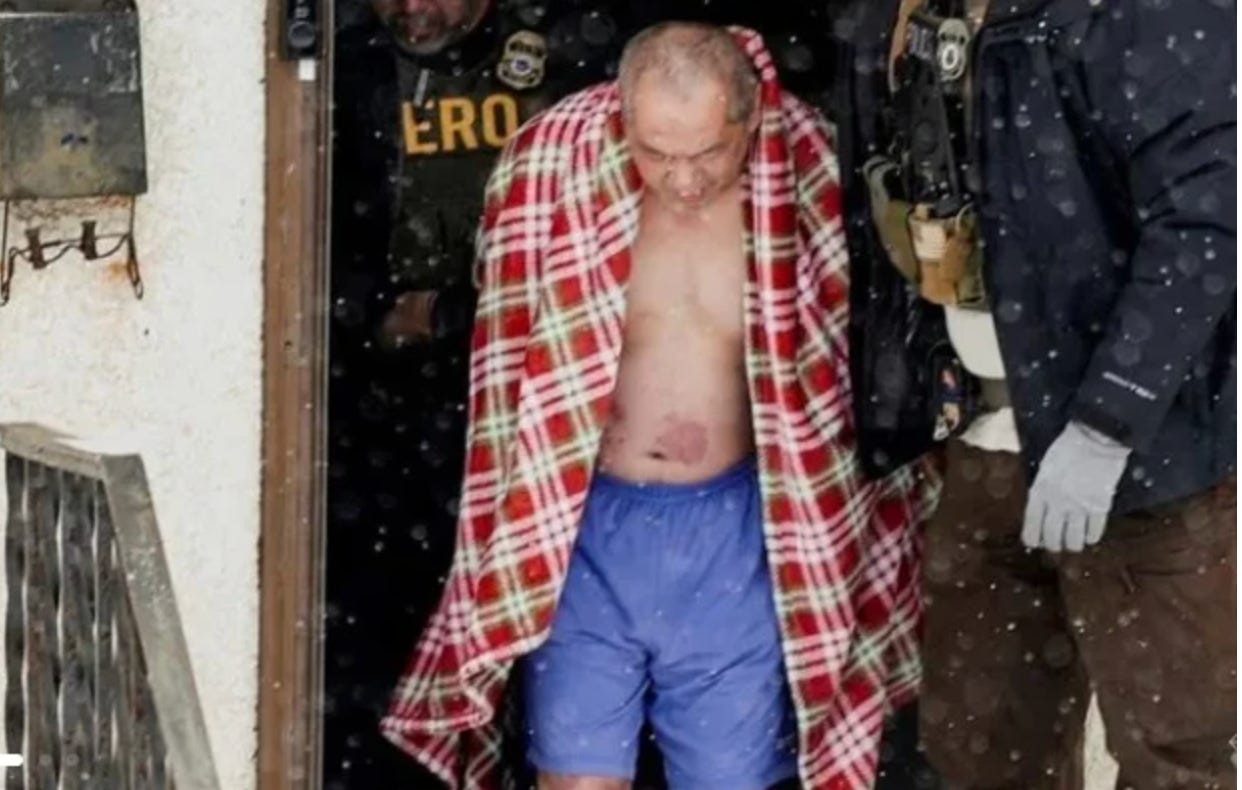
“When federal immigration agents broke into ChongLy Scott Thao’s home in St. Paul, MN before dawn Sunday, they dragged the elderly Hmong American grandfather outside in freezing temperatures wearing only underwear and Crocs. An hour later, after fingerprinting confirmed what his family insists should have been obvious, agents dropped the U.S. citizen back home without apology or explanation.” [Source]
Release hours or days later does not retroactively make those actions lawful or acceptable. And quite obviously, none of this has anything to do with a fraud investigation, the purported motive for ICE’s surge in Minnesota.
Citizens and noncitizens have rights
Noncitizens also have rights. Even the current Supreme Court, hardly a liberal institution, has affirmed that due process applies in deportation proceedings.
At the same time, in a troubling shadow-docket ruling in a case not yet fully heard, the Court declined to halt ICE detentions based on race. These “Kavanaugh stops” raise serious constitutional concerns and could and should be revisited.
Lesson 2: ICE lies and officials can lawfully constrain them
Why ICE’s public statements can’t be trusted
Given their record, statements from ICE or Trump administration officials should never be treated as presumptively true. That’s because they lie a lot.
We saw this after a Chicago shooting, where ICE’s account unraveled once video and text evidence emerged, ultimately forcing the government to drop its case against a woman an ICE agent shot.
We saw it again in Minneapolis with the killing of Renee Nicole Good. DHS Secretary Kristi Noem initially claimed ICE agents were immobilized by snow, a claim contradicted by video evidence. Statements that Good tried to mow down the agent were debunked because people took videos.
And we see it repeatedly in court.
What courts have actually said
In Minnesota, a federal judge issued a preliminary injunction after finding that ICE’s claims about protestors and legal observers did not match video evidence. Individuals ICE described as violent were not.
The court found that ICE’s conduct likely violated core First and Fourth Amendment protections and ordered them to stop.
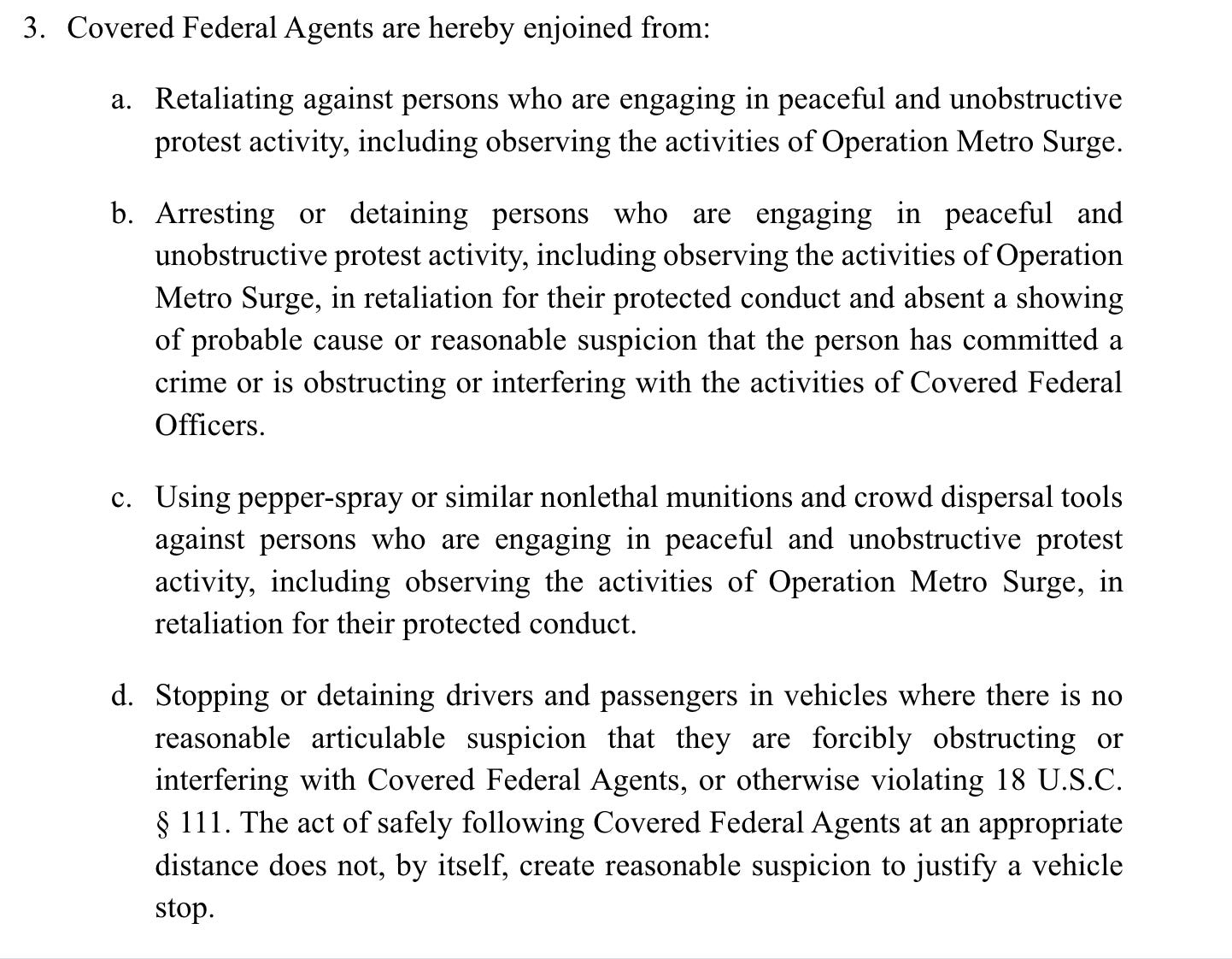
People have the right to protest ICE, to observe ICE, and to follow ICE in public spaces.
ICE may not arrest people simply for monitoring them, questioning them, or making them uncomfortable. Arrests require probable cause, not annoyance, speculation, or hostility to scrutiny.
ICE is not the final authority on what is legal. Courts, evidence, and the Constitution still matter.
ICE will continue to assert that it is the final authority on what is legal. Media outlets and members of the public should reject that premise.
“Just do what ICE says” is not respect for law. It is submission to unchecked power.
Why state and local officials matter
In Maine, state and local officials appear prepared to act. The governor, attorney general, and mayors of Portland and Lewiston have indicated they expect ICE to operate within constitutional and legal limits.
Cumberland County District Attorney Jacqueline Sartoris says she would prosecute unlawful uses of force by ICE and notes:
“What’s happening is the onboarding for ICE agents seems to be incredibly fast, and I’m not sure what instructions they’re getting about being mindful of people’s civil rights, their own legal limitations, and the need to deescalate and respect people’s basic rights to be free of fear.”
Public observation matters. Documenting and recording ICE encounters helps preserve evidence and accountability.
Lesson 3: Organize — and then organize some more
Minnesota’s response shows what coordinated community action looks like.
Thousands of residents are participating in ICE observation, documentation, and protest. Minnesotans have developed trainings for ICE observers and court watchers. Minnesota organizers emphasize nonviolence, discipline, and civic courage, much like leaders in the civil rights movement.
They’ve also built extensive mutual-aid networks: delivering food to families afraid to leave their homes, helping with rent, taking children to school, doing laundry, and supporting those who may be targeted.
For people unable to participate directly, there are clear and reliable ways to donate.
Their work is centralized, visible, and accessible, including through the website Stand With Minnesota.
Maine is building similar infrastructure. Organizers have launched hotlines, legal trainings, mutual-aid funds, and community education efforts.
There’s a resource hub and a hotline run by the Maine Immigrant Rights’ Coalition.

Crucially, community leaders understand that ICE enforcement does not target just one group.
Khmer Maine, a Portland-based nonprofit serving the state’s Cambodian community, is reviewing safety protocols to ensure citizenship classes and cultural events can continue without putting attendees at risk.
“We’re worried, of course,” said Executive Director Marpheen Chann, “but at the same time, what gives us comfort at Khmer Maine is that we’re not alone.”
Neighbor-to-neighbor outreach matters, too, letting people know they are seen, supported, and not isolated.
Minnesota is demonstrating what it looks like to resist intimidation without surrendering rights, to demand accountability without violence, and to organize without waiting for permission.
They’ve built a broad coalition, including religious leaders and involving people who haven’t been activists before.
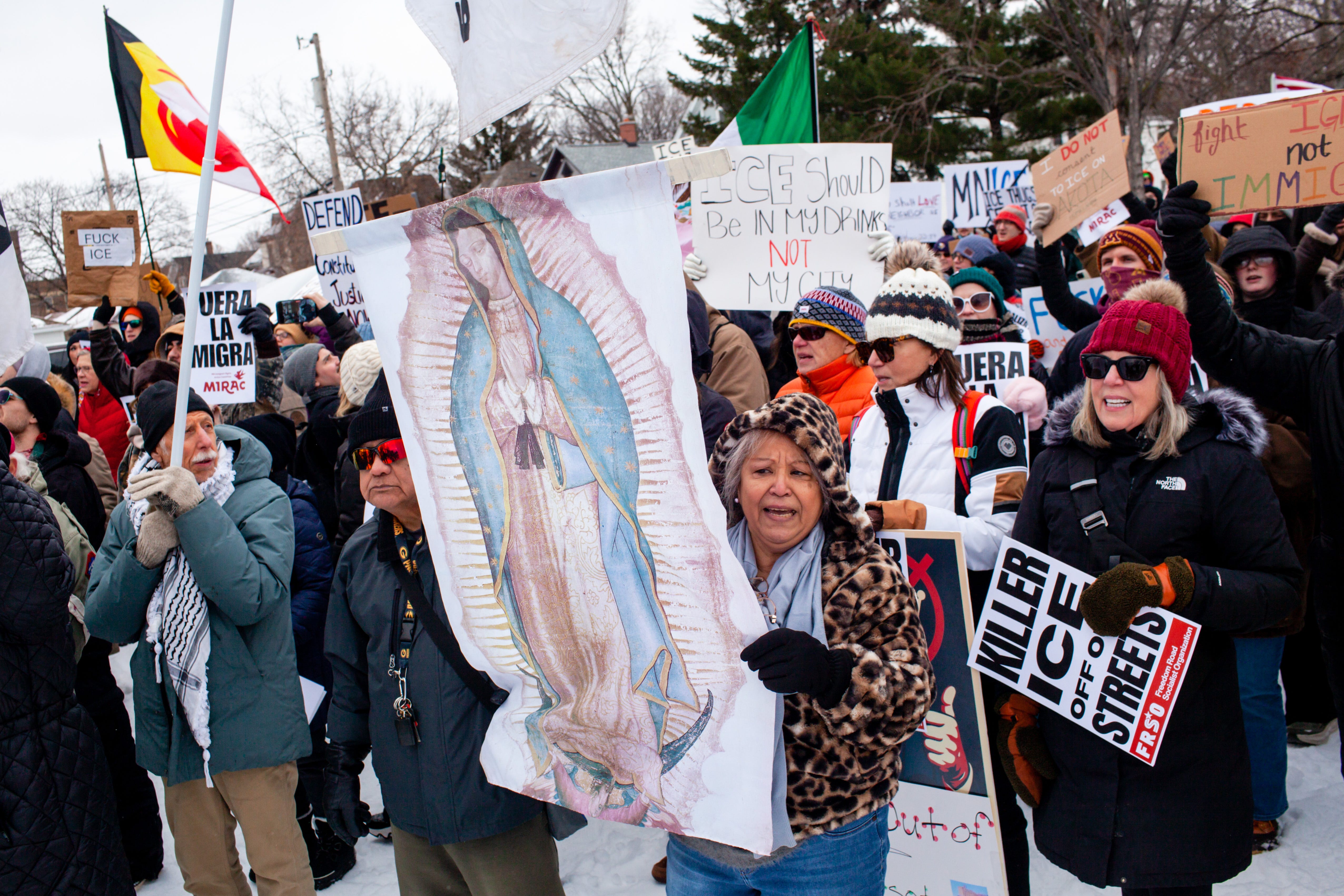
Photo of protest at Powderhorn Park in Minneapolis. Credit: Nicole Neri/Minnesota Reformer. [Source]
As a Jew I’m particularly proud of a statement by a group of Jewish clergy in Minnesota saying
“Our tradition repeatedly teaches us to love the stranger, remembering that we too have known the experience of being immigrants in a new land…
We hope that in the days ahead, chesed, kindness, will define the way we interact with each other… [with] courage to witness pain even when it is uncomfortable, and the resolve to take action toward building the world we want to see.”
Minnesota’s example shows how people push back against federal overreach, defend constitutional protections, and take care of one another in the face of state-sanctioned fear.
Another great post. One question: I thought the court had reconsidered and walked back the so called Kavanaugh stops--including Kavanaugh himself.